Traffic deaths in 2026 are moving in a positive direction in the United States. Early federal estimates show fewer people dying in crashes even as Americans continue to drive more miles. That is encouraging, but it does not mean the road-safety problem is solved. Tens of thousands of people still die on U.S. roads each year, and the newest numbers are preliminary.
The first-quarter 2026 estimate from the National Highway Traffic Safety Administration provides one of the clearest signs of improvement. NHTSA estimates that 7,770 people died in motor vehicle crashes from January through March 2026. That represents a 4.3% decline from the same period in 2025. The estimated fatality rate also fell to 0.99 deaths per 100 million vehicle miles traveled.
Those results follow a strong improvement in 2025, when NHTSA estimated 36,640 traffic fatalities, down 6.7% from 2024. The trend raises an important question: what is helping U.S. roads become safer? The answer is probably not one program or technology. Safer vehicles, crash-avoidance systems, enforcement, seat belt use, speed management, road design, and changing driving behavior can all influence the final result.
Road Safety Journal tracks these issues across our Crash Prevention, Vehicle Safety, and Road Safety Research sections. Looking at the data together helps explain why progress matters and why continued safety work remains necessary.
What the Latest Data Says About Traffic Deaths in 2026
The first three months of 2026 continued a downward trend that began after the sharp rise in traffic deaths during the pandemic era. NHTSA says the estimated 7,770 deaths in the first quarter were 4.3% lower than during the same period a year earlier. Thirty states and Puerto Rico recorded declines.
The improvement happened while Americans drove more. NHTSA estimates that vehicle travel increased by about 11 billion miles compared with the first quarter of 2025. That makes the lower fatality rate especially important because it measures deaths against the amount of driving exposure.
The First-Quarter Fatality Rate Fell Below 1.0
The estimated fatality rate dropped from 1.05 deaths per 100 million vehicle miles traveled in the first quarter of 2025 to 0.99 in the first quarter of 2026. If the estimate holds, NHTSA says it would be the second-lowest first-quarter fatality rate the agency has recorded.
A lower rate means the country experienced fewer deaths relative to the number of miles people drove. That is different from a decline caused mainly by reduced travel. In early 2026, the country saw both more mileage and fewer estimated deaths.
Why the 0.99 Fatality Rate Matters
Fatality rates allow researchers to compare road risk across years with different traffic volumes. A raw death count is useful, but it cannot show how much exposure changed. When people drive substantially more, a lower death rate can signal a meaningful improvement in safety performance.
The historical trend also provides perspective. IIHS reports that the motor vehicle death rate per 100 million miles traveled was 64% lower in 2024 than in 1975. Vehicles, roads, emergency medicine, occupant protection, and safety policies have changed dramatically over that period.

Early Estimates Still Require Caution
The first-quarter figures are estimates, not final annual totals. Fatality data can change as states complete crash reports and NHTSA updates national databases. Seasonal patterns also matter. A good first quarter does not guarantee that the same percentage decline will continue through the rest of the year.
Researchers should also avoid assigning the improvement to one cause without enough evidence. National fatality totals combine thousands of different roads, vehicles, drivers, laws, and local conditions. One type of crash can decline while another safety problem remains stubbornly high.
That is why traffic deaths in 2026 should be viewed as an encouraging trend rather than proof that one strategy has solved roadway risk.
Several Safety Changes May Be Helping
The decline in traffic deaths in 2026 may reflect several long-term safety improvements working together. Modern vehicles protect occupants better than vehicles from previous decades. Automatic emergency braking can help avoid or lessen some collisions. Electronic stability control reduces loss-of-control crashes, while improved structures and airbags help protect people when impacts occur.
Vehicle safety testing has also pushed designs forward. In June 2026, the Insurance Institute for Highway Safety reported that vehicle improvements associated with its crashworthiness testing program have saved nearly 50,000 lives since the program began in 1995. IIHS estimated that those improvements also produced more than $500 billion in societal savings.
Safer Vehicles Are Reducing Crash Consequences
Crashworthiness does not always stop a collision from happening, but it can determine whether occupants survive one. Strong passenger compartments, better restraints, side airbags, improved structural alignment, and modern front-end designs can reduce the forces that reach people inside a vehicle.
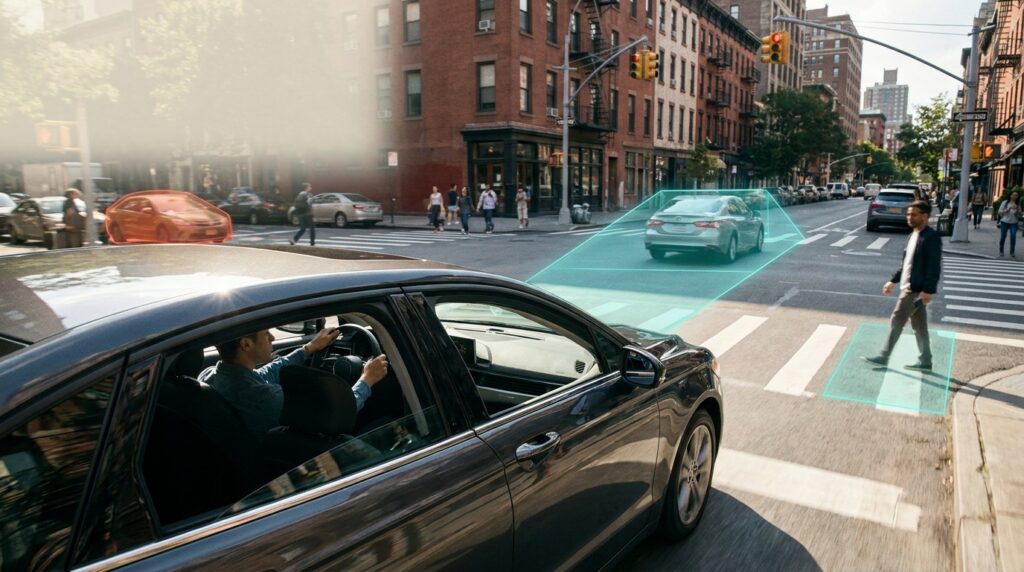
New crash-avoidance features add another layer. Automatic emergency braking, pedestrian detection, blind-spot warnings, lane-departure prevention, and improved headlights can help drivers respond before some dangerous situations become crashes.
Our Small Cars vs SUVs safety guide explains why vehicle size still matters. Our driverless car safety analysis looks at how newer automated systems compare with human drivers.
Speed, Seat Belts and Enforcement Still Matter
Technology cannot compensate for every dangerous choice. Speeding remains a major contributor to fatal crashes because higher speeds increase stopping distance and impact energy. NHTSA says early estimates for 2025 showed speeding-related fatal crashes down 11% from the previous year. Their share of fatal crashes also fell from 28% in 2024 to 27% in 2025.
Seat belts remain just as important. NHTSA data show that speeding drivers involved in fatal crashes are more likely to be unbelted than nonspeeding drivers. Alcohol impairment also overlaps with speeding at higher rates. These behaviors can combine and multiply risk.
Enforcement and public education can influence those choices. Campaigns against speeding and impaired driving remind drivers that dangerous behavior has consequences. However, enforcement works best when roads and vehicles also support safer decisions.
Distracted driving remains another concern. Our Distracted Driving in 2026 guide explains why phone use is difficult to measure and why driver-monitoring systems are becoming more important.
What Must Happen Next to Keep Traffic Deaths Falling
A downward trend should encourage more safety work, not less. The United States still recorded 39,254 motor vehicle deaths in 2024, according to IIHS analysis of federal data. Even a large percentage improvement leaves a substantial human cost.
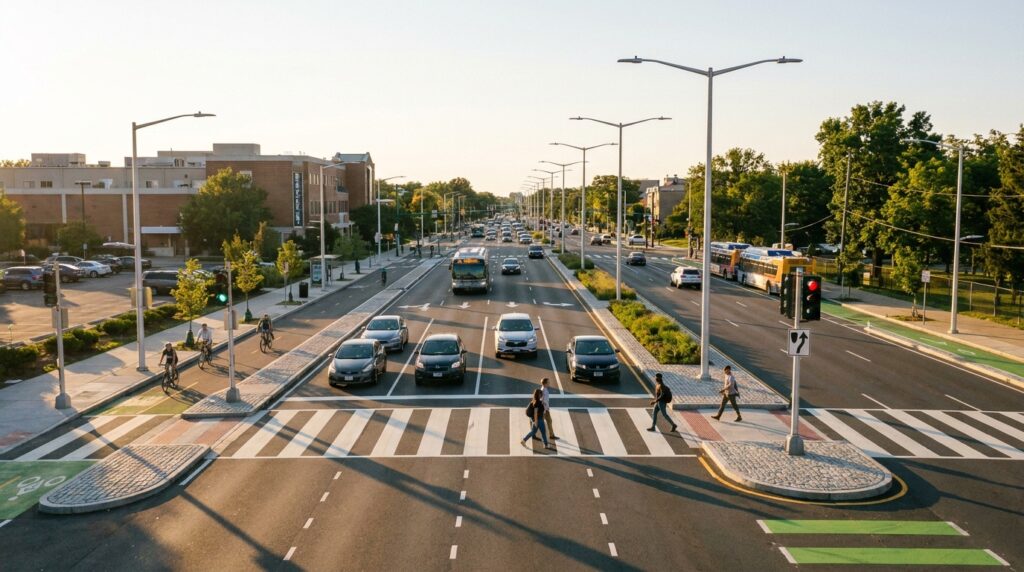
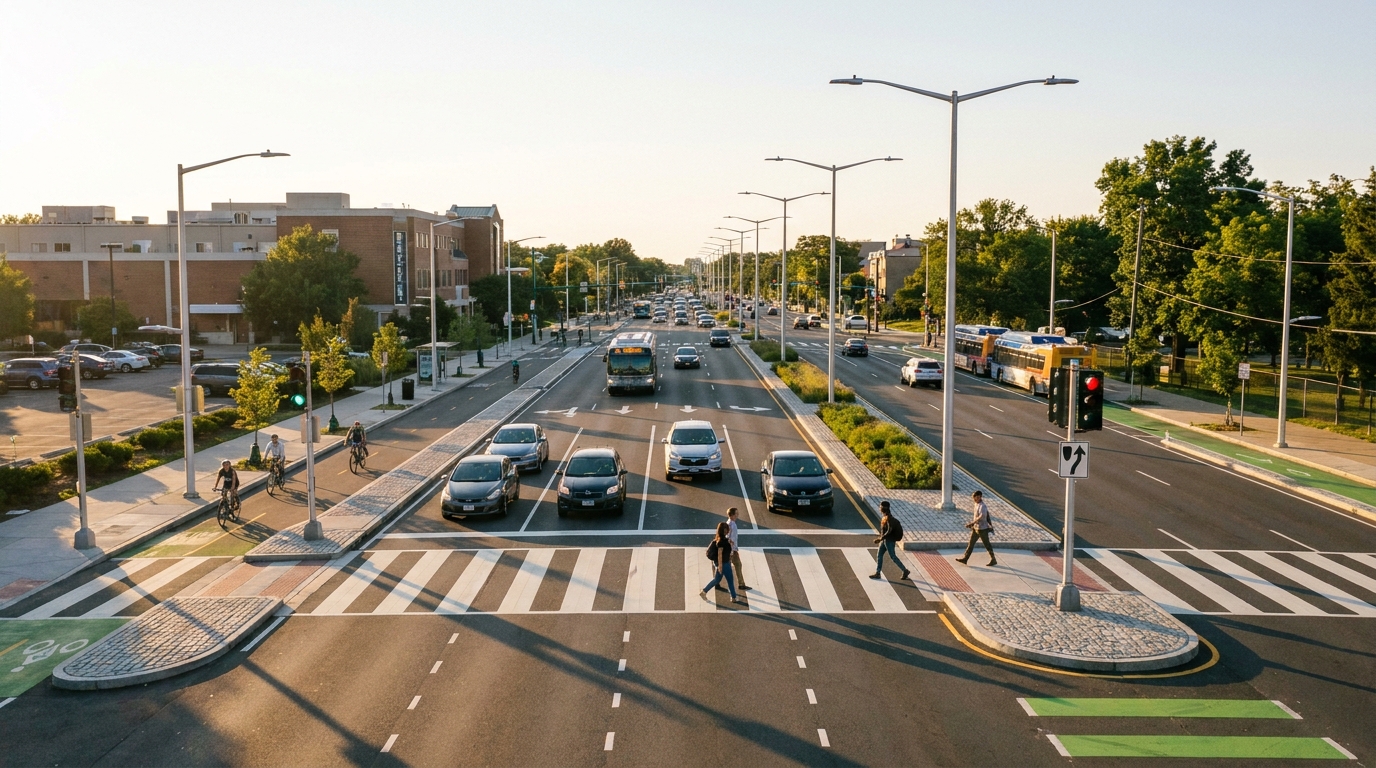
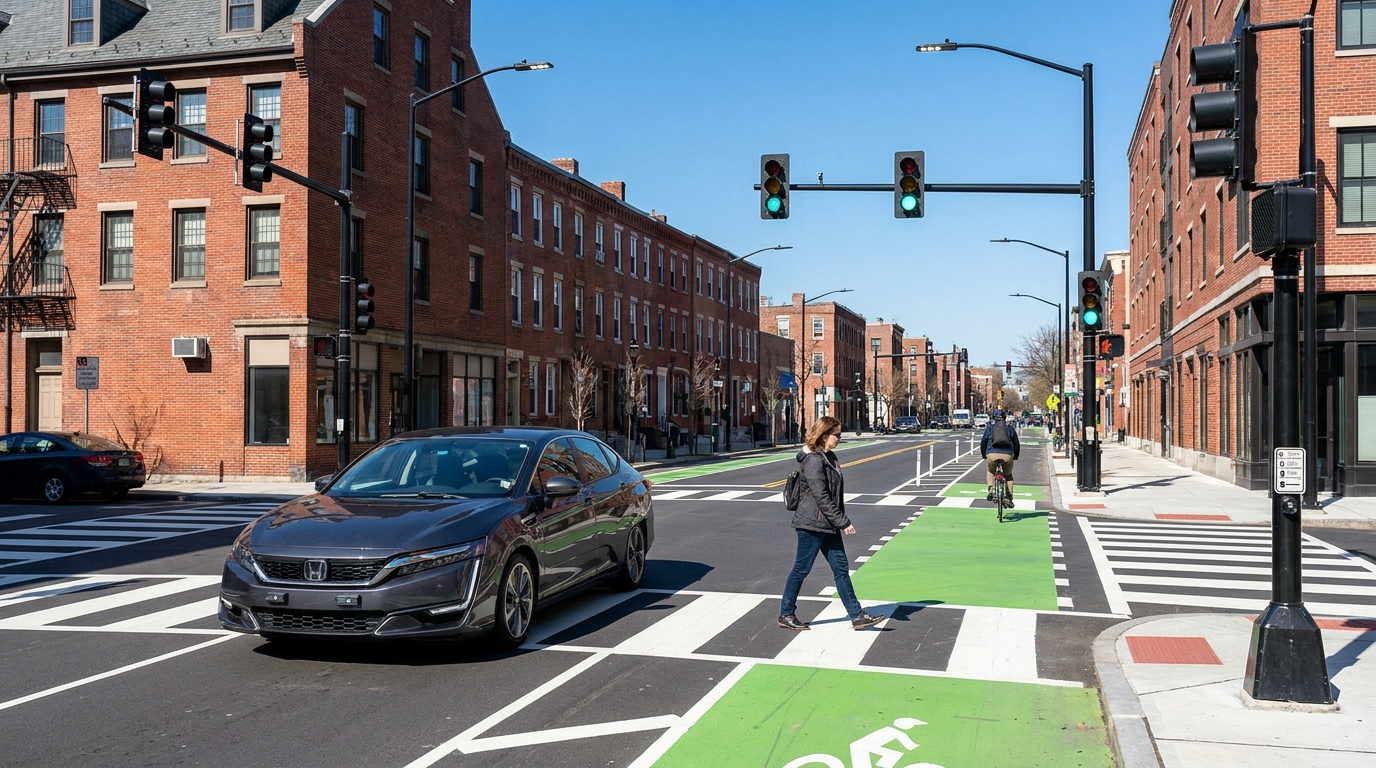
The strongest strategy is a layered one. Drivers need to slow down, stay sober, wear seat belts, and avoid distraction. Automakers need to keep improving crash protection and crash-avoidance systems. Transportation agencies need safer intersections, better lighting, clearer markings, protected space for vulnerable road users, and road designs that discourage dangerous speeds.
The Goal Is a Safer System, Not Just Safer Drivers
Human beings make mistakes. A strong road-safety system assumes those mistakes will happen and tries to prevent them from becoming fatal. That can mean designing streets for lower speeds, separating road users where practical, building vehicles that protect occupants, and using technology to detect danger sooner.
Pedestrians, bicyclists, and motorcyclists require special attention because they lack the protection of a vehicle cabin. A national decline in total deaths can hide persistent problems among specific road-user groups or locations. Communities should study local crash patterns instead of relying only on national averages.
Better data will also matter. Faster and more consistent crash reporting can help agencies identify emerging risks. Researchers can then measure whether new technologies, enforcement programs, or infrastructure changes actually reduce crashes rather than simply sounding promising.
To understand the official federal numbers, review the NHTSA first-quarter 2026 traffic fatality estimates. For long-term context, see the IIHS national fatality statistics.
The latest evidence gives the United States a reason for cautious optimism. Traffic deaths in 2026 are falling in the early estimates, the fatality rate is down, and the country is achieving that improvement while people drive more miles. The next challenge is to sustain the progress. Safer vehicles, safer streets, responsible driving, enforcement, and better evidence all need to work together if the decline is going to continue.