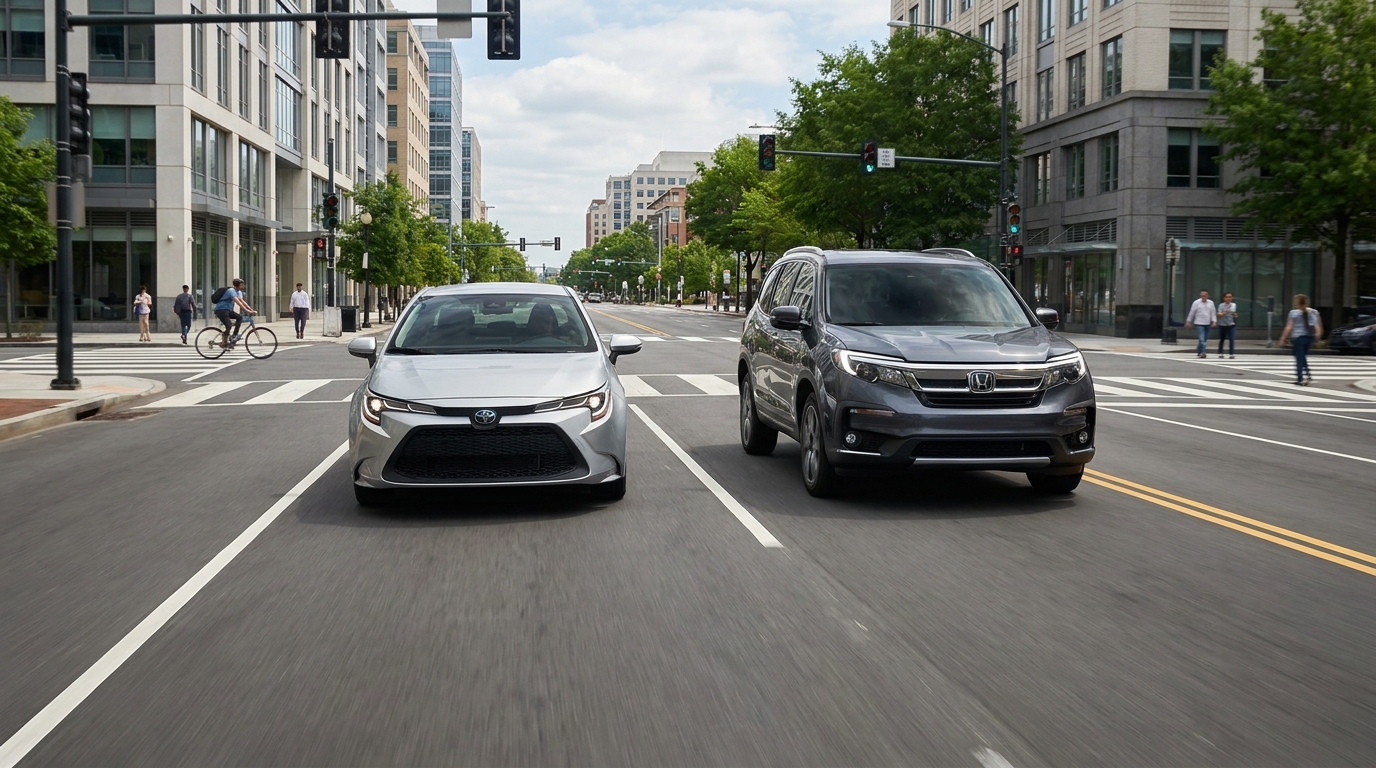
Small cars vs SUVs is one of the most important vehicle-safety comparisons for drivers in 2026. A larger vehicle can give its occupants more protection in a serious crash, but size alone does not decide whether a vehicle is safe. Crashworthiness, crash-avoidance technology, driver behavior, vehicle design, and the type of collision all matter.
New data from the Insurance Institute for Highway Safety gives drivers a clearer view of the tradeoffs. IIHS reported in July 2026 that small cars remain heavily represented among vehicles with high driver death rates. At the same time, large pickups and some large SUVs can create greater risk for people in other vehicles. Bigger vehicles can also pose more danger to pedestrians and bicyclists because of their height and front-end shape.
The best choice is therefore not simply “buy the biggest vehicle.” Drivers should compare real-world death rates, crash-test results, active safety systems, visibility, and how the vehicle fits their actual needs. Our Vehicle Safety hub covers these factors in more detail, while Road Safety Research explains how researchers measure risk.
What 2026 Data Shows About Small Cars vs SUVs
IIHS calculates driver death rates using real-world fatal crashes and registration data. The latest report examined 2023 model-year vehicles and equivalent earlier models using deaths that occurred from 2021 through 2024. Across all vehicle types, the average driver death rate was 37 deaths per million registered vehicle years.
The averages varied sharply by vehicle class. Small cars had a driver death rate of 79 per million registered vehicle years. Small SUVs were much lower at 38. Midsize SUVs were lower still at 24. Very large SUVs had a rate of 20, while large luxury SUVs had a rate of 10.
Those numbers do not mean every SUV is safer than every small car. They show that size and vehicle class influence real-world outcomes. They also reflect who buys different vehicles, where people drive them, how many miles they travel, and how they behave behind the wheel.
Why Small Cars Can Be at a Disadvantage
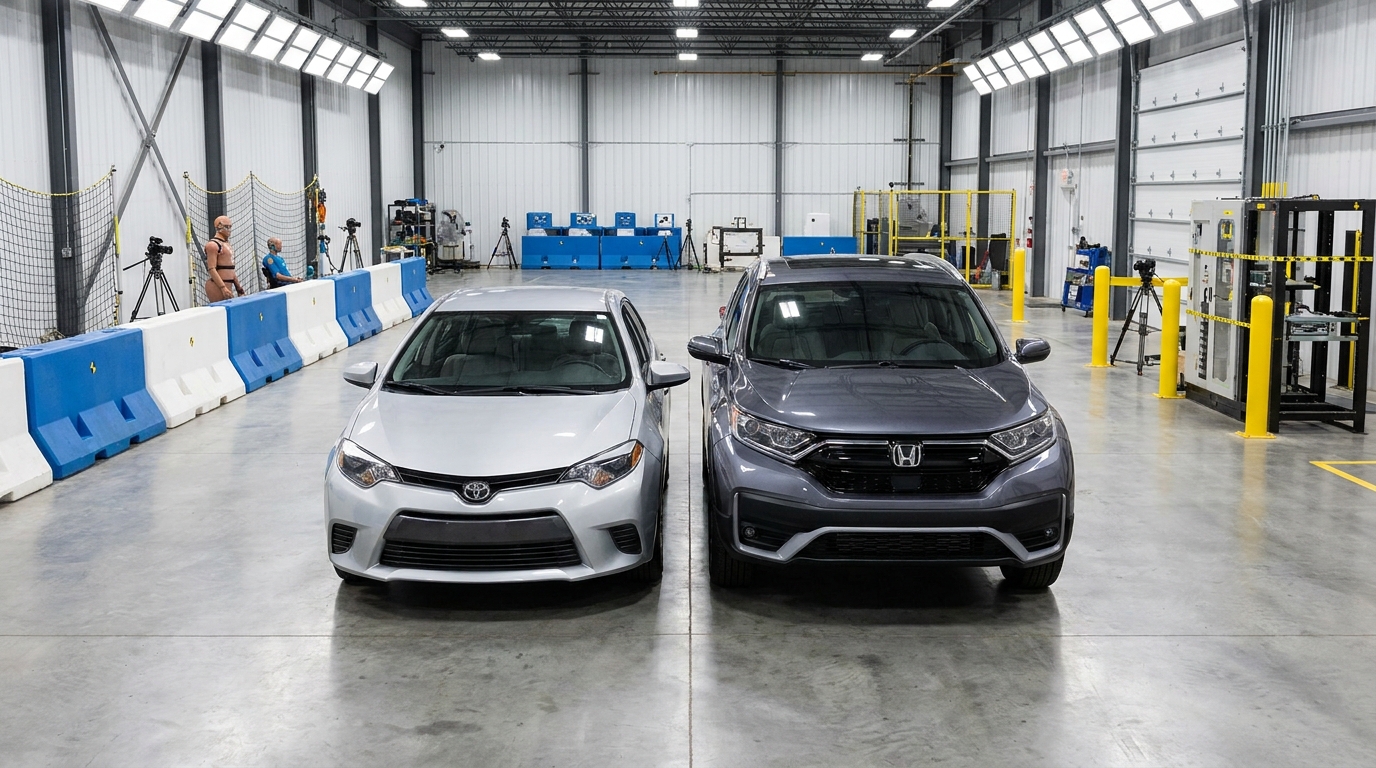
Physics is a major reason. In a crash between a lighter vehicle and a heavier one, the lighter vehicle usually experiences a larger change in speed. That can expose its occupants to greater forces. Larger vehicles also tend to have longer front structures that can absorb more crash energy before it reaches the passenger compartment.
IIHS notes that a lighter vehicle will always face some disadvantage when it collides with a heavier vehicle. This helps explain why even a small car with strong crash-test ratings may not provide the same protection as a well-designed larger vehicle in a severe two-vehicle crash.
Driver Death Rates Highlight the Size Gap
The 2026 IIHS data make that difference easy to see. Minicars had a driver death rate of 158 per million registered vehicle years, while small cars had a rate of 79. Small SUVs were at 38, less than half the small-car rate. Midsize SUVs were at 24.
Several individual small cars also appeared among the models with the highest driver death rates. However, model-level results need context. IIHS explains that driver death rates reflect more than vehicle design. Driver age, driving style, mileage, road conditions, and other factors can affect the results.
Bigger Vehicles Can Protect Occupants Better
Vehicle length can help in frontal crashes because it gives the structure more space to deform and absorb energy. Weight can also reduce the forces experienced by people inside the heavier vehicle when two vehicles collide.
That does not make every large SUV a top safety choice. IIHS 2026 ratings show major differences among large SUVs. Some earn Top Safety Pick or Top Safety Pick+ awards, while others receive weaker results in specific crash tests or crash-prevention evaluations. Buyers should compare safety performance within the vehicle class instead of assuming that size guarantees strong design.
Our article on driverless car safety in 2026 makes a similar point about technology: labels and marketing matter less than measured performance. The same rule applies to conventional vehicle safety.
Why SUVs Can Create More Risk for Other Road Users
The small cars vs SUVs question changes when we look beyond the people inside the vehicle. A heavier vehicle may protect its own occupants while transferring more force to a smaller crash partner. Very large pickups show this issue most clearly.
In the latest IIHS data, very large pickups had an other-driver death rate of 110 per million registered vehicle years. Small SUVs had a rate of 46, while midsize SUVs were also at 46. The average across all vehicle classes was 53.
Vehicle compatibility has improved over time. Automakers changed the structures of many SUVs so their energy-absorbing components align better with those of cars. IIHS reports that modern SUVs are less dangerous to car occupants than older SUVs once were. Pickups, however, still create a larger mismatch in many crashes.
Pedestrians Face a Different Kind of Size Risk
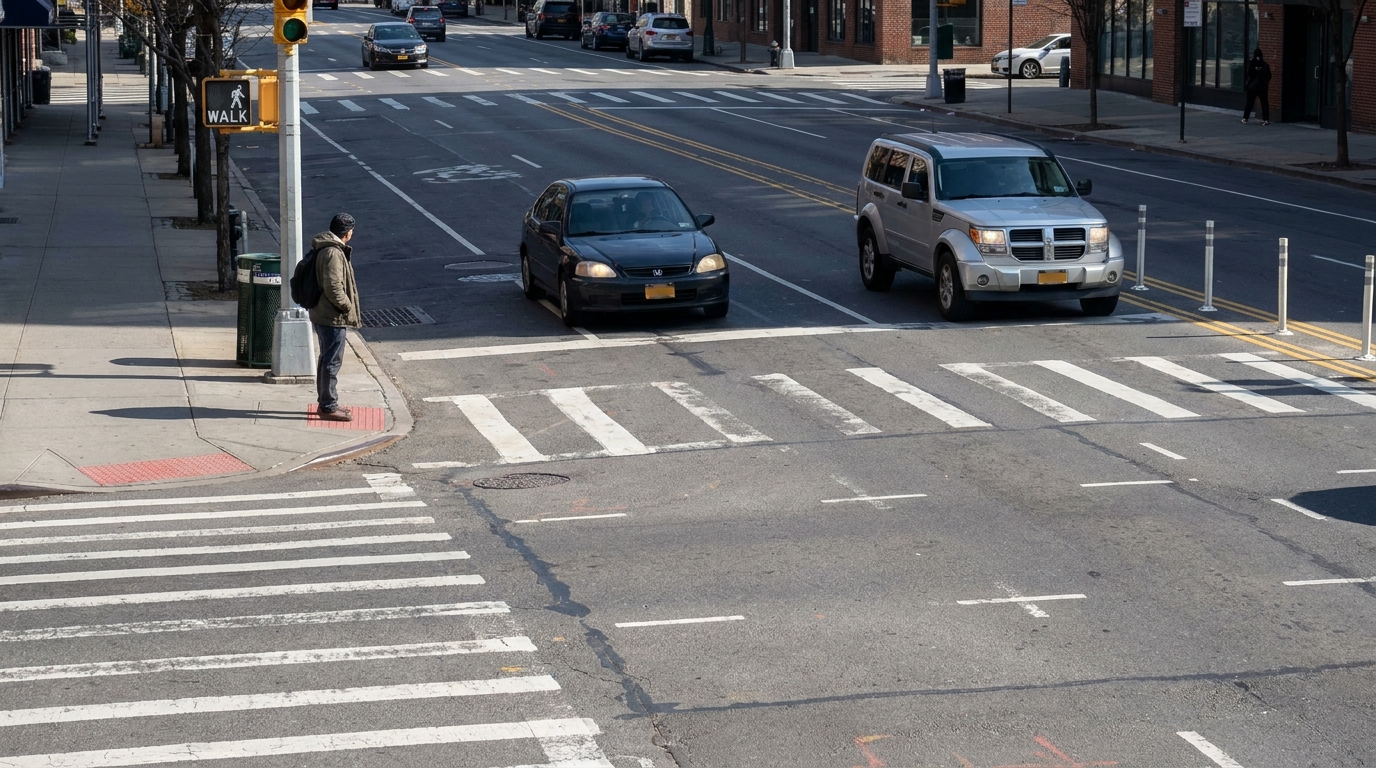
Pedestrians and bicyclists do not benefit from the protection of a passenger compartment. Vehicle height and front-end shape can therefore become critical. IIHS research shows that larger vehicles such as SUVs and pickups are more likely to cause severe or fatal injuries to pedestrians than cars.
Tall, blunt front ends can strike a person higher on the body. That raises the chance of serious injuries to the torso and head. IIHS has also found that vehicles with hood heights above 40 inches were about 45% more likely to cause pedestrian fatalities than vehicles with lower, sloped front ends.
This is one reason vehicle safety should include the safety of people outside the vehicle. Automatic emergency braking with pedestrian detection, better visibility, lower front ends, and safer road design can all reduce risk. See our Crash Prevention hub for more strategies that address the whole road system.
How to Choose Between Small Cars and SUVs for Safety
The safest purchase depends on more than one statistic. Start with a vehicle’s current crash-test ratings. Then review its front crash prevention, headlights, seat belt reminders, blind-spot systems, visibility, and other safety features. A well-designed smaller vehicle can still be a strong choice, especially when it performs well in its size class.
IIHS 2026 Top Safety Pick+ criteria require good ratings in the small overlap, moderate overlap, and side crash tests. Qualifying vehicles also need acceptable or good headlights and strong crash-prevention performance. Several 2026 small cars and many small and midsize SUVs meet those standards.
Safety Ratings, Size and Driver Behavior All Matter
Crash ratings and death rates answer different questions. Crash tests evaluate how a vehicle performs in controlled situations. Driver death rates show what happens in the real world, where driver behavior and exposure vary. Smart buyers should consider both.
A driver who speeds, drives distracted, or fails to wear a seat belt can erase much of the protection offered by a highly rated vehicle. If distraction is a concern, our Distracted Driving in 2026 guide explains how phones and other tasks raise crash risk.
Visibility also matters. Larger vehicles can create bigger blind zones, especially close to the front and sides. Drivers should test seating position, mirrors, camera systems, and sight lines before buying. Families should consider how easy it is to see children, cyclists, and low objects around the vehicle.
Size Is Only One Part of a Safer Vehicle
For many drivers, a small or midsize SUV offers a practical middle ground. It may provide more mass and ride height than a small car without the extreme size of a very large SUV or pickup. But the best choice still depends on crash-test results, active safety technology, handling, visibility, and the driver’s needs.
Drivers should also remember that the safest vehicle is one they can control confidently. A very large vehicle can be harder to park, maneuver, and judge in tight spaces. A smaller vehicle may offer better visibility and easier handling for some drivers. Safety is strongest when vehicle design and driver capability work together.
For an authoritative look at the newest numbers, review the IIHS 2026 report on driver death rates. You can also read the IIHS research on vehicle size and weight for more detail on crash physics and pedestrian risk.
The 2026 evidence does not support a simple winner in the small cars vs SUVs debate. SUVs generally offer more occupant protection, but larger size can raise risks for other road users. Small cars can perform very well in crash tests, yet they still face a physical disadvantage when hit by heavier vehicles. The best decision is to combine size, crashworthiness, crash avoidance, visibility, and safe driving habits rather than relying on one feature alone.