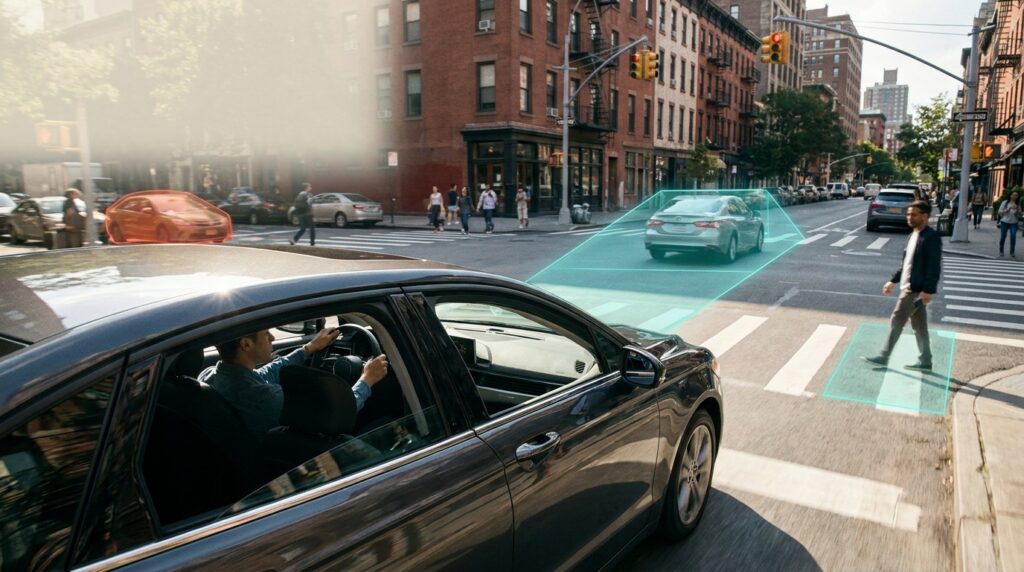
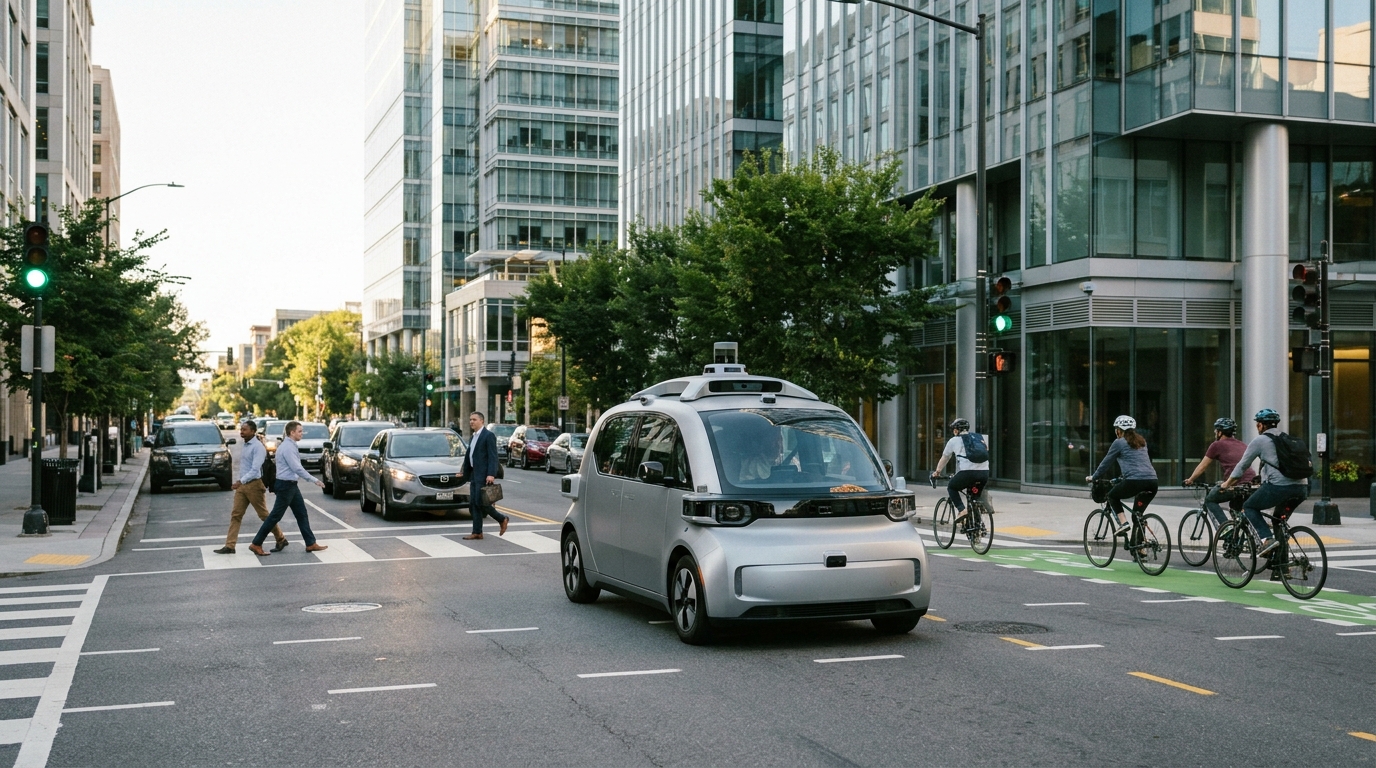
Driverless car safety moved from theory to real-world testing in 2026. Fully autonomous robotaxis now operate on public roads in several U.S. cities, and researchers finally have enough mileage to compare some of their crash rates with human drivers. The early results are encouraging, but they do not prove that every autonomous vehicle is safer in every place or situation.
A July 2026 study from the Insurance Institute for Highway Safety found that Waymo’s Level 4 driverless vehicles had a 68% lower police-reportable crash rate per mile than human drivers in San Francisco, Phoenix, Los Angeles, and Austin. The finding is important because it comes from an independent safety research organization. It also includes an important warning: today’s federal reporting system is not yet strong enough to monitor autonomous-vehicle safety at much larger scale.
That distinction matters. A robotaxi that performs well in a mapped service area is not the same as a consumer car using partial automation on any road. Readers should separate fully driverless technology from systems that still require constant human supervision. Our Vehicle Safety and Road Safety Research hubs explain these differences in more detail.
What 2026 Driverless Car Safety Data Actually Shows
The strongest recent evidence comes from vehicles operating at SAE Level 4. In this type of system, the automated driving system can perform the entire driving task within a defined operating area and set of conditions. A human driver does not need to supervise every moment inside that approved domain.
IIHS researchers compared Waymo crashes with human-driver crashes using vehicle miles traveled. They also tried to account for an important reporting problem. Autonomous-vehicle operators must report certain crashes to federal regulators, including incidents that a human driver might never report to police. To create a fairer comparison, researchers reviewed crash narratives and focused on incidents that a reasonable person would typically report.
The result was a 68% lower crash involvement rate for Waymo vehicles than for human drivers across the four cities studied. That is a meaningful difference. Human drivers can become tired, impaired, distracted, angry, or inattentive. Automated systems do not drink alcohol, text friends, or fall asleep.
However, the comparison does not mean autonomous systems have solved road safety. The study examined one company operating a specific Level 4 system in selected urban areas. It did not prove that every robotaxi, every automated-driving design, or every future deployment will produce the same result.
Why the 68% Lower Crash Rate Matters
The 68% figure matters because crash rate per mile provides a better comparison than simply counting crashes. A fleet that drives millions of miles will naturally experience more incidents than a fleet that drives only a few thousand. Looking at crashes per vehicle mile helps researchers compare exposure more fairly.
It also matters because the IIHS analysis focused on crashes similar to those people usually report to police. Without that adjustment, autonomous fleets can appear worse simply because their reporting requirements capture minor incidents that disappear from ordinary human-driver statistics.
Injury crashes may show an even larger difference
Waymo’s own safety data provide another useful signal. Through March 2026, the company reported more than 220 million fully autonomous miles. Its analysis found substantially lower rates of injury-producing, airbag-deployment, and serious-or-fatal crashes than human benchmarks in the same operating areas.
Company data deserve careful interpretation because the company has a direct interest in the technology. Still, the findings point in the same direction as the independent IIHS study. The combination strengthens the case that at least some mature Level 4 systems can reduce certain types of crashes within their current operating environments.

Not every mile carries the same risk
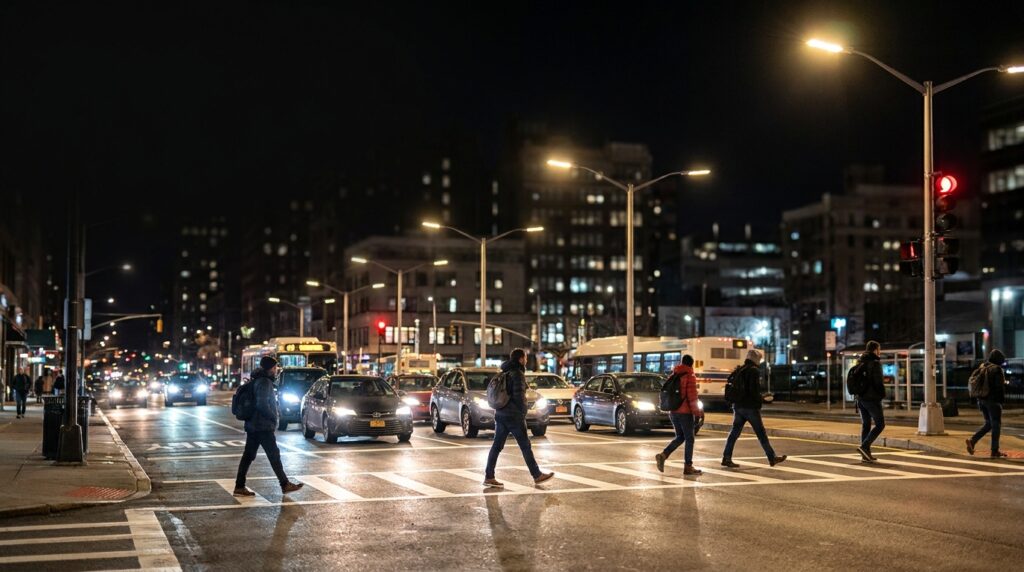
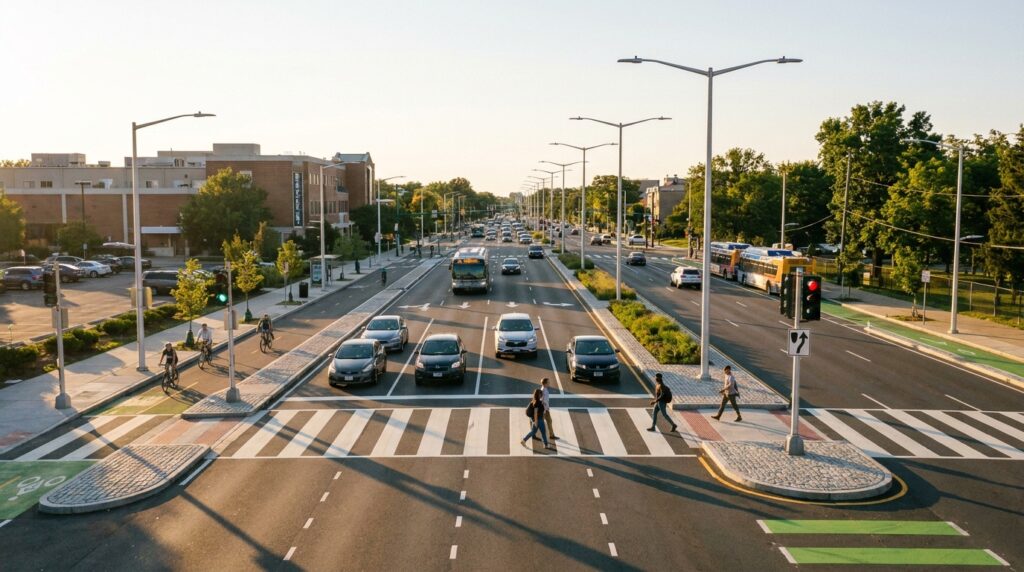
Researchers also need to consider where and when vehicles travel. A mile driven on a quiet freeway at noon does not carry the same risk as a mile driven through a dense entertainment district after midnight. Weather, road design, traffic volume, pedestrian activity, and impairment rates can all change the baseline risk.
Recent research has increasingly used time- and location-matched human benchmarks. This approach makes driverless car safety comparisons more useful because it avoids comparing a robotaxi’s urban nighttime mileage with an unrelated national average dominated by different roads and driving conditions.
Driverless Cars and Driver-Assistance Systems Are Not the Same
Public discussions often use terms such as “self-driving,” “autonomous,” and “driverless” as if they mean the same thing. They do not. This creates one of the biggest sources of confusion in road-safety discussions.
A Level 4 robotaxi can drive without a human supervising the road while it operates inside its approved domain. By contrast, many consumer systems combine adaptive cruise control, lane centering, automated lane changes, or other assistance features while still requiring the driver to remain responsible.
This difference affects crash risk. A supervised system can fail when the human driver assumes the car will handle more than it actually can. If attention drifts, the driver may not be ready to respond when the system reaches its limit. Our Driver Safety section covers attention, supervision, and the risks of overreliance on vehicle technology.
Automation level matters more than the marketing name
Drivers should judge a system by what it can actually do, not by the product name on a dashboard. The key question is whether the system performs the entire driving task or merely assists a human driver.
For partially automated vehicles, the human remains the fallback. That means the driver must watch the road and remain prepared to take control. For a true Level 4 driverless service, the automated system itself handles the driving task within its operating conditions.
This is why one company’s Level 4 safety record cannot automatically prove that a different supervised system is equally safe. Sensors, software, maps, operational limits, remote assistance, testing methods, and safety processes can vary widely.
Are Driverless Cars Safer Than Human Drivers Overall?
The most accurate answer in 2026 is: some fully driverless vehicles appear safer than human drivers in the places and conditions where researchers have studied them, but the evidence is not broad enough to declare all autonomous driving safer in every situation.
That may sound cautious, but good road-safety analysis should be cautious. Driverless car safety depends on more than the average crash rate. Researchers also need to examine crash severity, vulnerable road users, unusual road conditions, emergency situations, software failures, interactions with first responders, and performance outside familiar service areas.
Regulators also need reliable data. IIHS has argued that the current federal crash-reporting system for automated vehicles needs improvement. A larger driverless fleet will create more exposure and more varied situations. Safety monitoring must keep pace with that expansion.
What Still Needs to Improve Before Driverless Cars Scale
Better reporting should make it easier to compare autonomous systems across companies. Researchers need consistent information about mileage, crash severity, operating conditions, automation status, and whether another road user caused the incident. Without common measures, safety claims can become difficult to verify.
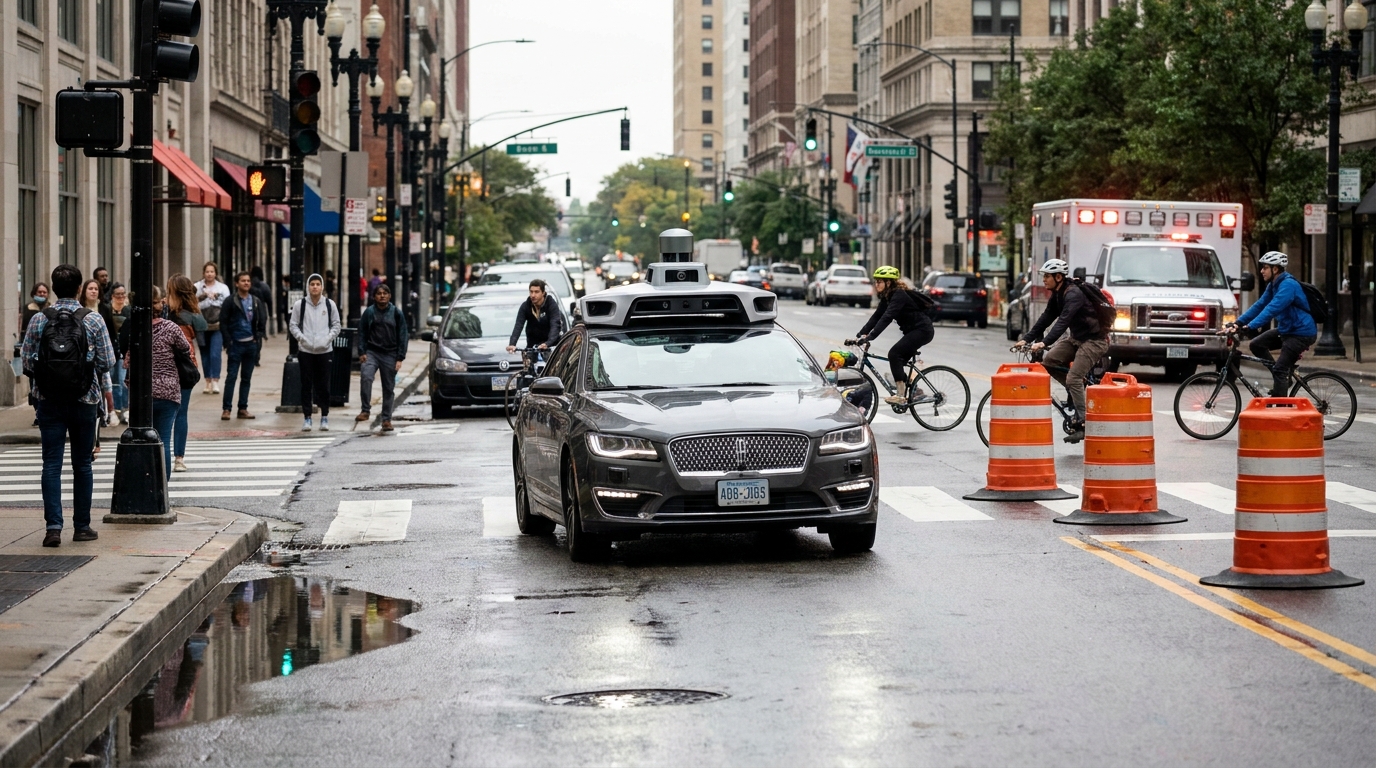
Autonomous systems must also handle rare events. Most driving is predictable, but the hardest situations may involve unusual construction, emergency vehicles, debris, damaged traffic signals, extreme weather, hand gestures from police officers, or unexpected pedestrian behavior. Safe expansion requires strong performance in these edge cases, not just ordinary traffic.
Public trust will depend on transparency as well. People are more likely to accept driverless vehicles when they can see clear, independently reviewed evidence. Companies should publish enough information for researchers to test safety claims instead of asking the public to rely on marketing.
Safer does not mean crash-free
No road vehicle can eliminate every collision. A driverless car may be struck by a reckless human driver. A pedestrian may enter the roadway unexpectedly. A sensor can encounter conditions that make detection harder. Roads themselves can create conflict through poor design.
The useful question is therefore not whether autonomous vehicles can avoid every crash. The better question is whether they can reduce the frequency and severity of crashes compared with the human driving they replace.
So far, the strongest 2026 evidence gives a qualified yes for one mature Level 4 system operating in several U.S. cities. That is a significant road-safety development, but it is not the end of the research. As deployments expand, independent evaluation will become even more important.
For more context, visit our Crash Prevention hub and our Road Laws & Regulations section. You can also review the independent IIHS analysis of driverless vehicle crash rates for the research behind the 2026 comparison.
The direction is promising. Better automation could remove many crashes linked to distraction, impairment, fatigue, and poor judgment. But the standard should remain evidence, not hype. The future of driverless car safety will depend on transparent data, careful regulation, and systems that prove their performance mile after mile.