School-zone driving safety deserves attention throughout the year, but darker mornings and changing weather can make routine school traffic harder to manage. In 2026, the central lesson remains straightforward: a school zone is a changing environment filled with pedestrians, cyclists, buses, turning vehicles and families who may be distracted by their schedule.
Drivers cannot make a crossing safe simply by obeying the posted number while ignoring what is happening around them. The correct speed also depends on congestion, visibility and the presence of children near the curb. Road safety works best when individual behavior is supported by clear crossings, predictable pick-up arrangements and street design that encourages caution.
Why School-Zone Safety Is About More Than Signs
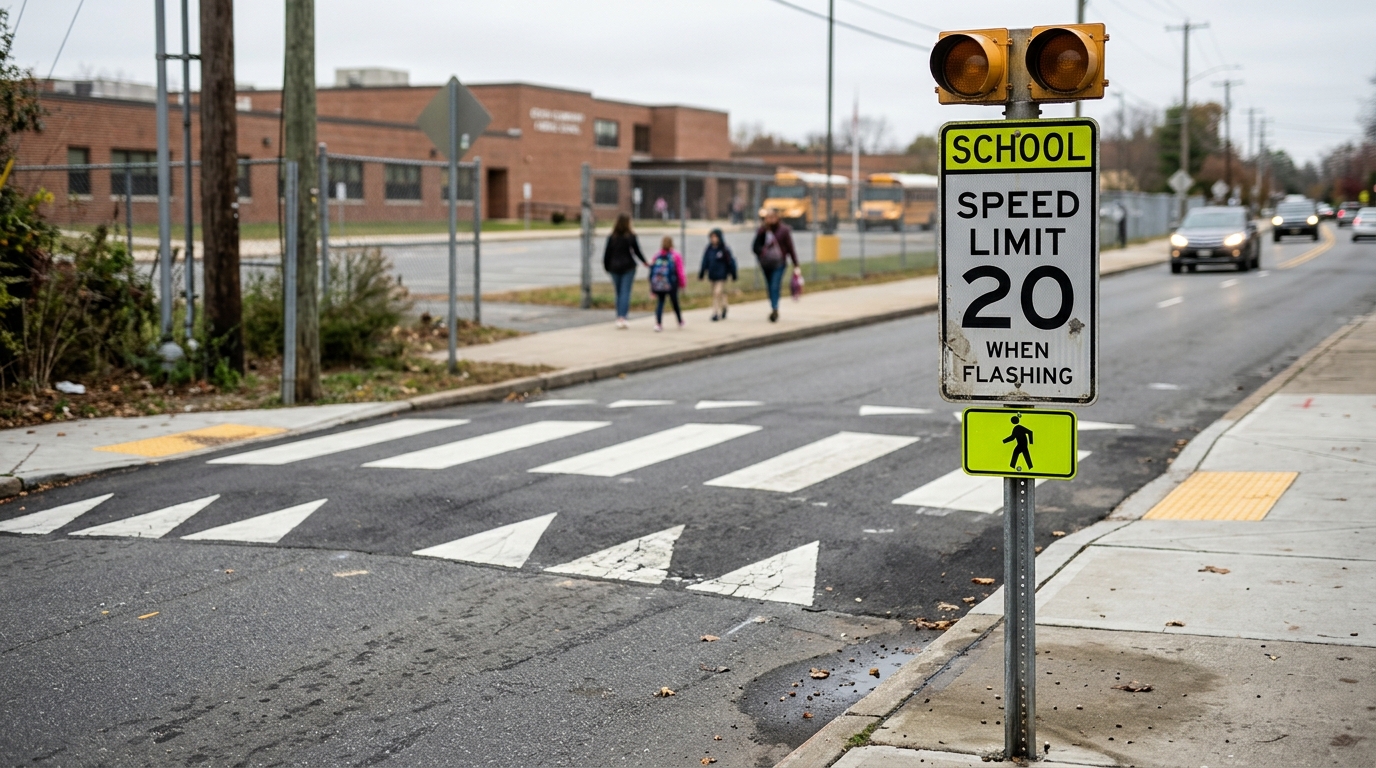
Watch for children moving between parked cars, opening vehicle doors and crossing outside marked locations. They may not judge approaching speeds accurately. Keep attention on the entire street rather than only the nearest crosswalk. Avoid blocking sidewalks, curb ramps or bicycle lanes while waiting for a pick-up location to clear.
Recognize the Conflict Points Around Schools
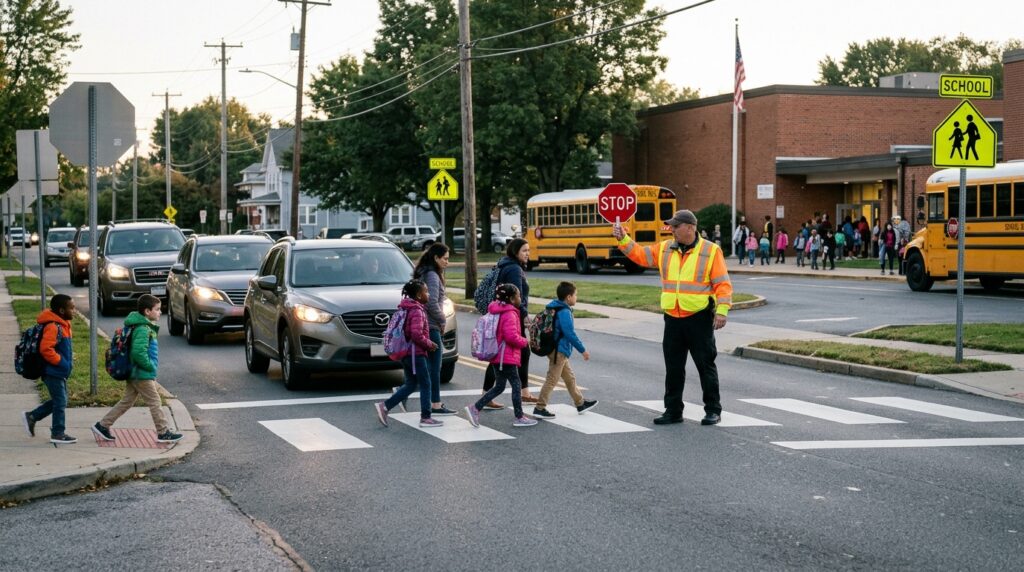
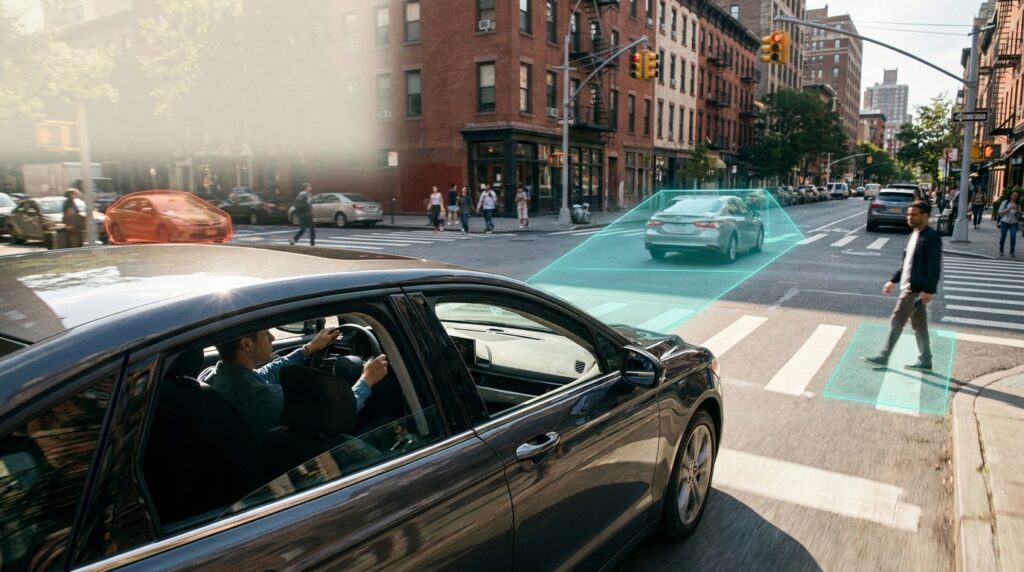
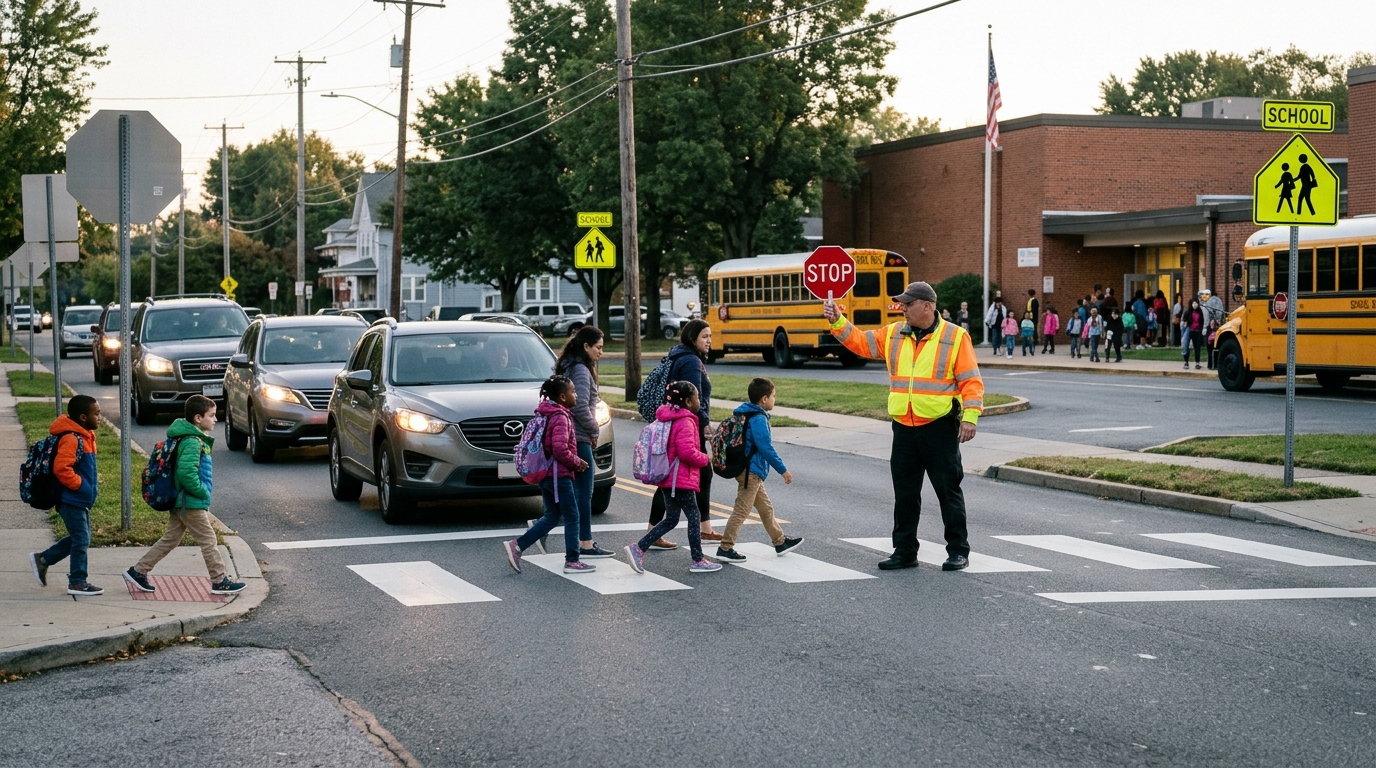
Crosswalks require particular care at turns. A driver who checks only for moving vehicles can overlook a person already entering the crossing. Slow before the intersection, scan both sides and avoid rolling through a turn while looking away from the direction of travel. Never pass a vehicle stopped at a crossing without understanding why it has stopped.
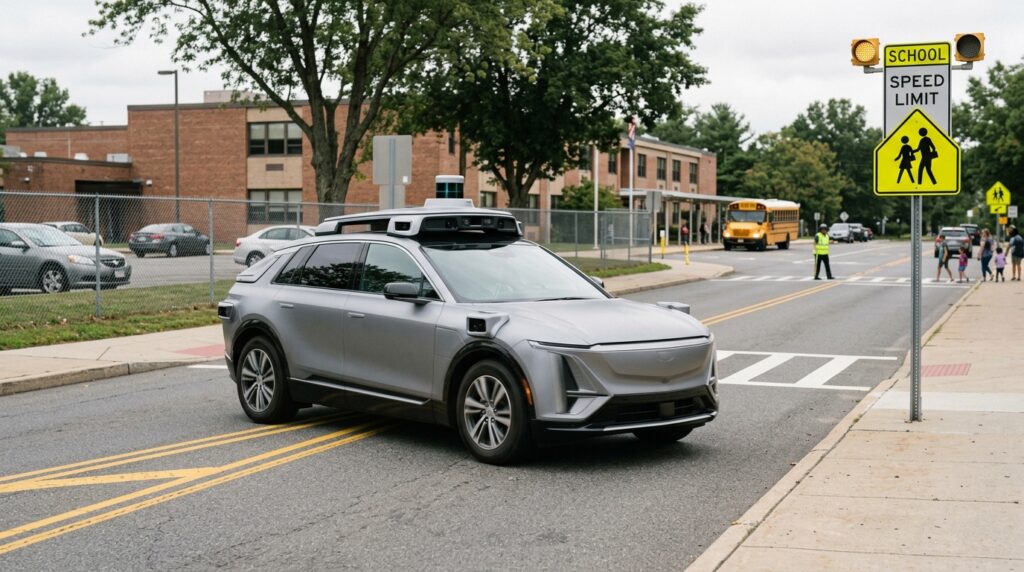
School-zone risks often begin before a driver reaches the school sign. Traffic may queue around an intersection, a parent may pull away from a curb, and children may approach from between parked vehicles. A driver who notices only the posted limit can miss these changing conditions. Look ahead for pedestrians and cyclists, reduce speed early, and avoid passing a stopped vehicle when the reason for its stop is unclear. Local markings and crossing-guard directions determine what drivers are required to do in that setting.
Approach Crosswalks With Extra Margin
Speed matters because it affects reaction time, stopping distance and potential injury severity. A few miles per hour can change whether a driver has room to stop. Treat weather, parked vehicles and low sun as reasons to add time and distance, not to hurry through a familiar corridor. The safest driving decision may simply be to wait.
Understand Why Speed Changes Outcomes
School arrivals are not all identical. Some campuses use dedicated bus loading areas; others place cars, bicycles and pedestrians along the same frontage. Follow the school’s published route and traffic plan. Avoid last-minute U-turns or double parking that force people into unexpected paths. If there is confusion, ask school staff where vehicles should queue.
Practical Habits for Drivers and Families
Parents and caregivers can support safety by teaching children to use designated crossings and make eye contact when possible, without relying on eye contact as proof that a vehicle will stop. Practice the route together and discuss driveways, visibility and safe waiting spots. Older students should still avoid crossing while absorbed in a screen.
The drop-off routine deserves attention because it repeats every school day. Families can choose a legal loading area, keep children on the sidewalk until the vehicle stops safely, and avoid sudden U-turns or double parking. Schools can communicate the preferred pickup flow in plain language so visitors understand it as well as regular families. When the route becomes congested, a last-minute shortcut is rarely an improvement. More predictable movement benefits people walking, biking, using mobility devices, and driving through the same street.
Manage Pick-Up and Drop-Off Congestion
A helpful observation exercise is to visit the school frontage without the pressure of a morning deadline. Notice where sightlines are blocked, where cars queue and whether a crossing is difficult to see at dusk. Report recurring problems through appropriate city or school channels with dates and specific locations rather than posting identifiable images of students.
A School-Zone Safety Checklist
NHTSA’s pedestrian safety resources explain how lighting, roadway design, behavior and enforcement interact. A local school community can use that systems perspective to discuss better signs, crossings or speed management. However, infrastructure requests should be based on local engineering assessment and the authority responsible for the road.
For an official reference, review NHTSA pedestrian safety countermeasures. It provides a useful source to check alongside the practical guidance here. Confirm current information directly rather than relying on an undated copy or an unverified social post.
How Street Design Supports Safer Travel
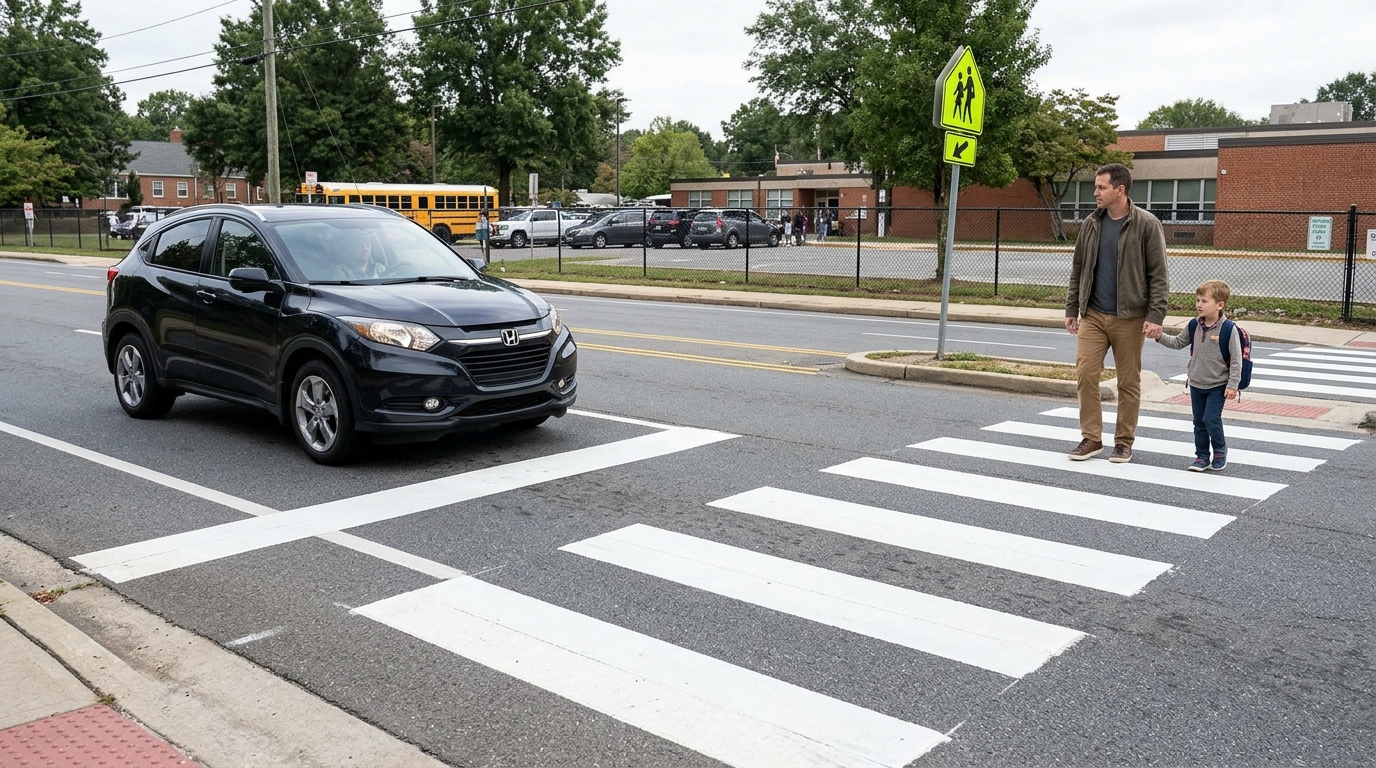
When driving, put the phone away before entering the area, reduce speed early and be patient with people who cross slowly. When walking, choose marked routes and stay predictable. When cycling, use the correct route and yield as required by local rules. Everyone benefits when the school street feels less rushed.
Reporting a recurring hazard works best with precise observations. Note the intersection, direction of travel, time window, and type of conflict. Describe blocked ramps, inadequate sight lines, speeding, or illegal parking separately rather than grouping every problem under a broad complaint. Where appropriate, include a safe photograph that does not identify children. Send the information to the relevant city, school district, or road authority, and keep the report number. This helps agencies evaluate a pattern and communicate any response.
Use the following checklist as a decision record.
Complete the steps in a sensible order, make notes about any unresolved issue, and return to them before acting. The objective is to improve the quality of the next decision—not to claim that a single list replaces local rules or individual circumstances.
- Leave extra travel time before school arrival. Put the relevant date and location beside the result, so a future reader knows exactly when and where the information applies. Keep the original source available for comparison.
- Reduce speed ahead of crossings and congested curbs. Use this step to make a specific decision rather than collecting facts without a purpose. Where the answer is uncertain, choose the safer or more conservative option.
- Do not block sidewalks or accessible ramps. Keep related documents, photographs, or confirmations together in a clearly named folder. A simple record can prevent details from being lost when circumstances change.
- Watch for children between parked vehicles. If other people are involved, agree in advance who is responsible for this part of the plan. Do not rely on somebody else to guess that it has been completed.
- Follow school loading routes and crossing guards. Review the result whenever conditions or requirements change. An earlier check may be useful history, but it is not automatic proof of what applies today.
- Report persistent problems with exact location and time details. Know when to stop and ask an official source or qualified professional for help. A checklist can organize your judgment, but it cannot eliminate every risk.
How to Report a Repeated Safety Concern
School-zone driving safety is not a one-week awareness campaign. It is a repeated commitment to seeing hazards early and giving vulnerable road users more space. Small everyday decisions become especially important when daylight fades or the morning crowd becomes unpredictable.
For more context on a related issue, read our pedestrian safety at night guide. That existing article approaches a different part of the subject; compare its scope before applying advice across situations.
Common questions
Are school-zone speed limits the same everywhere? No. Follow local signs and current law; limits can differ by jurisdiction and time. Check the current source and the relevant location before acting; a general guide cannot account for every change in operating conditions, rules, or individual circumstances.
Is eye contact enough to know a driver will yield? No. Wait for a clear, safe crossing opportunity and follow local crossing instructions. Keep the underlying documents and dates accessible if you need to discuss the issue later. When the stakes are significant, obtain advice from an appropriate qualified source.
The value of this school-zone driving safety guide is in a habit of verification: decide what matters, check the most relevant source, preserve the result, and update a plan when new facts appear. The underlying steps should remain useful even after the season or publication year has passed.