Pedestrian safety at night remains one of the biggest challenges on U.S. roads. Pedestrian deaths have started to decline after several difficult years, but darkness still concentrates a large share of fatal crashes. Final 2024 data show that 7,080 pedestrians died in traffic crashes nationwide. According to the Insurance Institute for Highway Safety, 73% of those deaths occurred between 6 p.m. and 6 a.m.
The latest 2025 preliminary data offer some encouraging news. The Governors Highway Safety Association projects that drivers struck and killed 6,732 people walking in 2025, down 7% from 2024. That marked a third straight annual decrease. However, the projected total remained about 5% above the 2019 pre-pandemic level. Progress is real, but the nighttime risk has not disappeared.
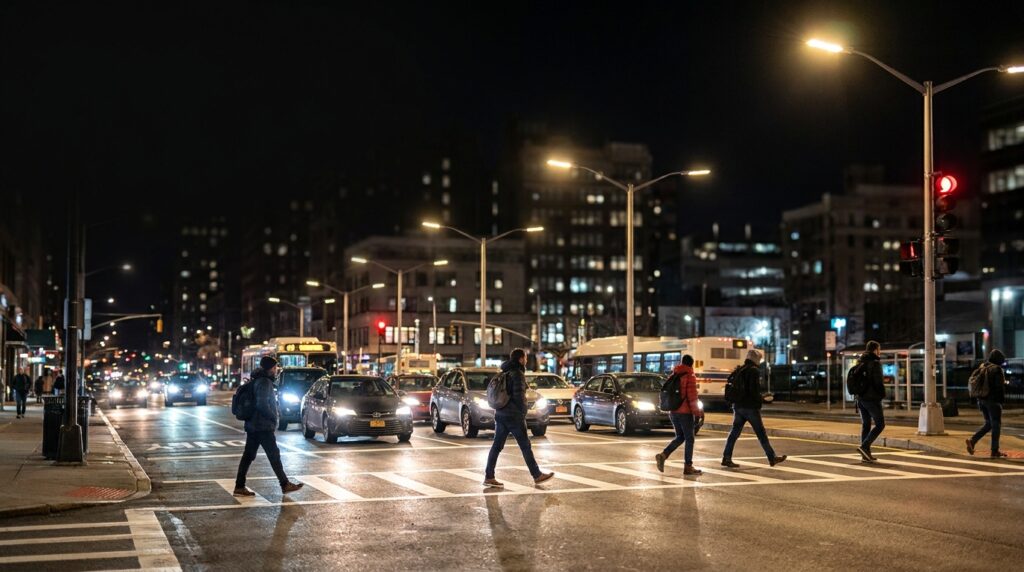
Darkness changes the road environment for both drivers and pedestrians. Drivers have less time to recognize people near the roadway. Headlight performance, street lighting, vehicle speed, dark clothing, glare, weather, and road design can all affect visibility. A safer system must address those factors together. For broader strategies, visit our Crash Prevention and Driver Safety hubs.
Why Pedestrian Safety at Night Is Still a Major Concern
Pedestrian crashes do not occur evenly throughout the day. IIHS data for 2024 show that nearly three-quarters of pedestrian fatalities happened between 6 p.m. and 6 a.m. The period from 6 p.m. to 9 p.m. accounted for 24% of deaths, while 9 p.m. to midnight accounted for another 23%. Midnight to 6 a.m. added another 26%.
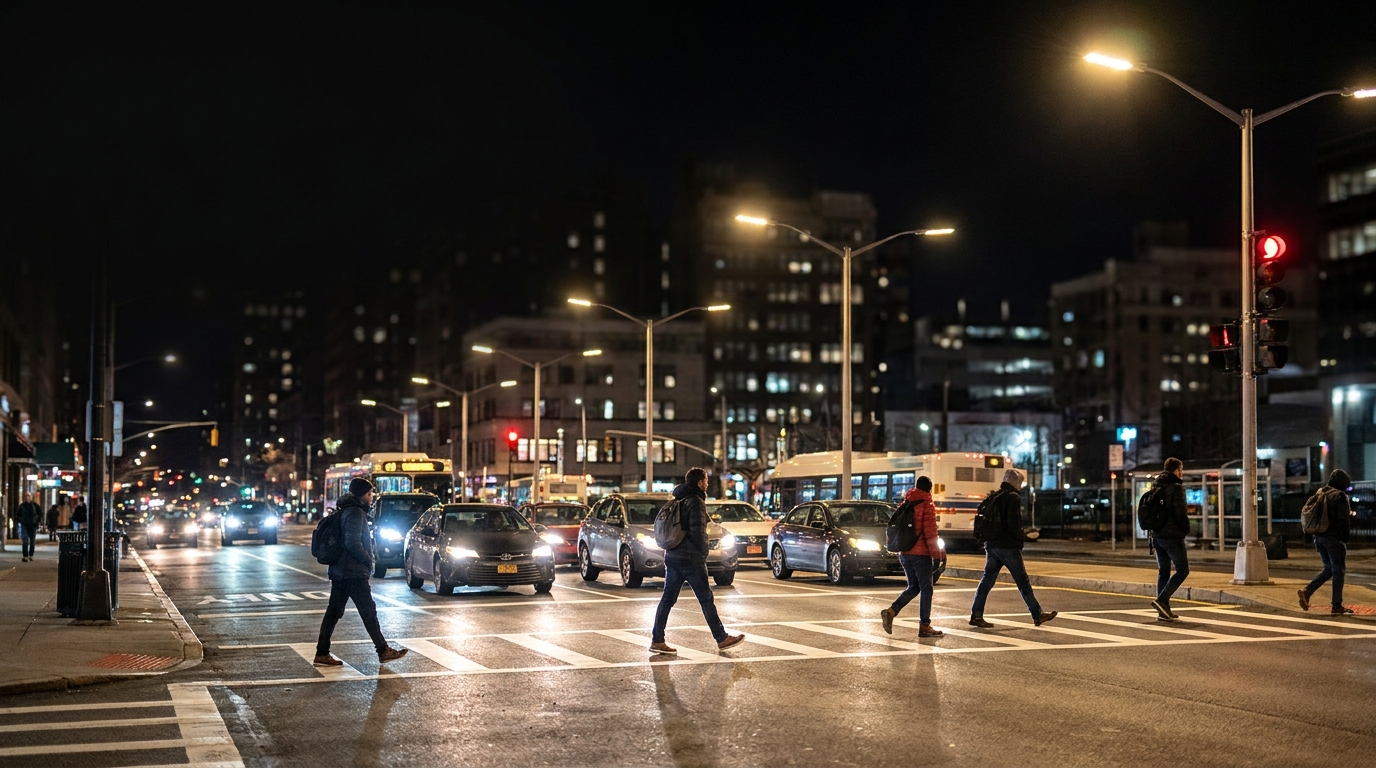
That concentration matters because the amount of walking is not necessarily highest during those hours. Instead, darkness changes how quickly drivers can see and respond to a person. A pedestrian may be visible under one streetlight and nearly disappear a few steps later. Drivers may also approach at speeds that exceed the distance illuminated by their headlights.
Visibility Drops Before Drivers Realize It
Human vision works differently in low light. Drivers can usually see bright objects and reflective markings sooner than people wearing dark clothing. Glare from headlights, wet pavement, storefronts, and other vehicles can make detection even harder. Older drivers may need more light to recognize hazards, while dirty windshields or poorly aimed headlights can reduce useful visibility for anyone.
Road design can make the problem worse. Wide roads, long crossings, missing sidewalks, poorly marked crosswalks, and inadequate lighting increase the time pedestrians spend exposed to moving traffic. A crossing may be legal but still feel unsafe if a driver has little time to notice someone entering the road.
Nighttime Fatalities Are Concentrated in a Few Hours
The 2024 IIHS data show how sharply risk rises after sunset. Of the 7,080 pedestrians killed that year, 1,703 died between 6 p.m. and 9 p.m. Another 1,648 died between 9 p.m. and midnight. Those two three-hour windows alone accounted for almost half of all pedestrian deaths.
The numbers do not mean darkness caused every crash. Speed, impairment, distraction, road design, and pedestrian behavior may also contribute. Still, the time pattern shows why pedestrian safety at night deserves targeted attention from drivers, communities, and transportation agencies.
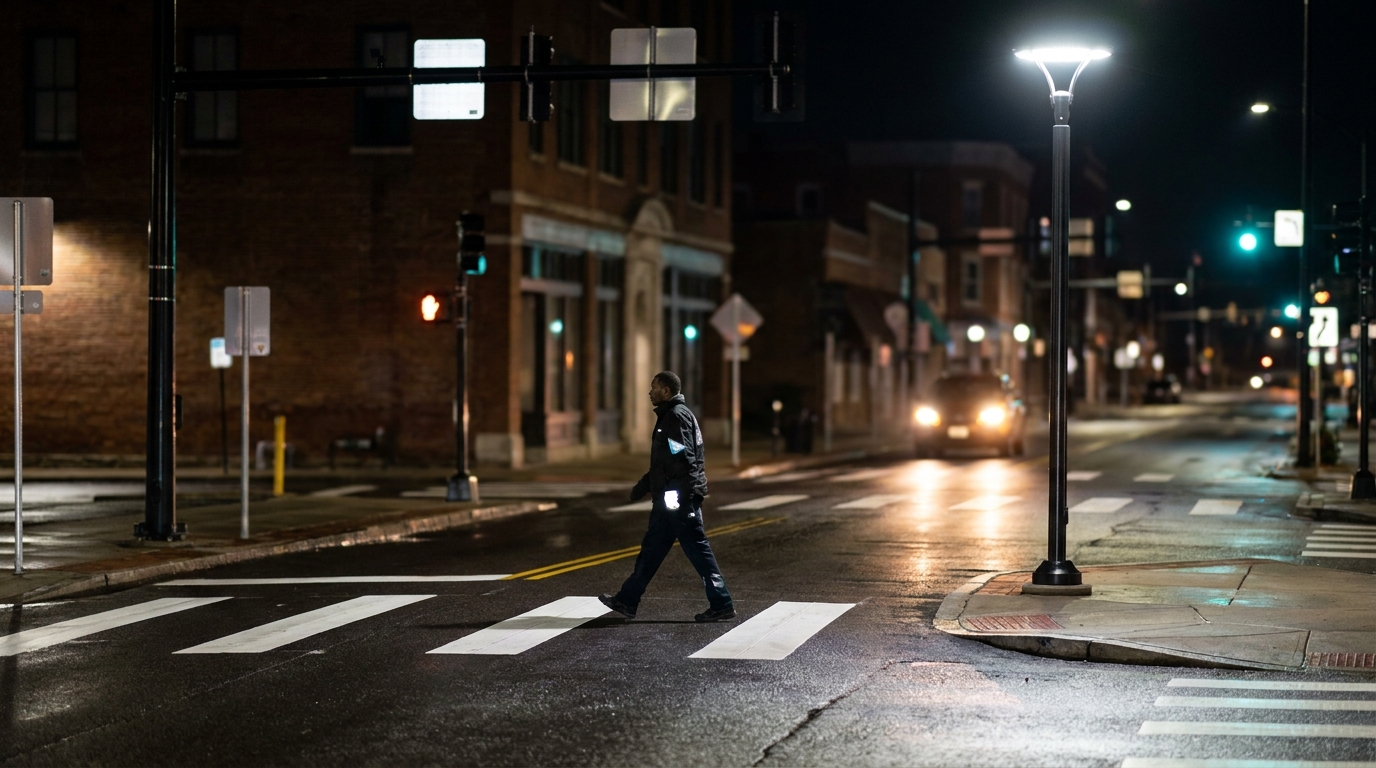
Alcohol and Nighttime Risk Can Overlap
IIHS also reports that 34% of pedestrians age 16 and older who were killed in crashes from 9 p.m. to 6 a.m. in 2024 had blood alcohol concentrations of at least 0.08%. During daytime hours, the comparable share was 20%.
That statistic should not shift responsibility away from drivers. Drivers must still watch for people and avoid impaired driving themselves. Instead, it shows that pedestrian risk can involve several factors at once. Safer streets should account for predictable human mistakes rather than assuming every road user will behave perfectly.
Speed Makes Darkness More Dangerous
Speed changes both the likelihood of a crash and the severity of the outcome. A faster vehicle travels farther during the driver’s reaction time and needs more distance to stop. At night, that can create a dangerous mismatch between how far ahead a driver can see and how much roadway the vehicle needs to avoid a person.
Drivers should reduce speed when visibility drops, even when the posted limit allows a higher speed. A speed limit sets a legal maximum under appropriate conditions. It does not guarantee that the same speed is safe in darkness, rain, glare, or heavy pedestrian activity. Our Road Laws & Regulations hub provides more context on driver responsibilities and safe road use.
Vehicle Design Also Affects Pedestrian Outcomes
Visibility is not only about lighting. Vehicle shape can influence whether a driver sees a pedestrian and how severe a collision becomes. Tall SUVs and pickups can create larger front blind zones than lower passenger cars. Their higher front ends can also strike pedestrians higher on the body.
That is one reason buyers should consider more than occupant protection. Automatic emergency braking with pedestrian detection, strong headlight performance, front cameras, and good outward visibility can all support safer driving. Our Small Cars vs SUVs safety guide explains how vehicle size can affect both occupants and vulnerable road users.
How Drivers and Communities Can Improve Pedestrian Safety at Night
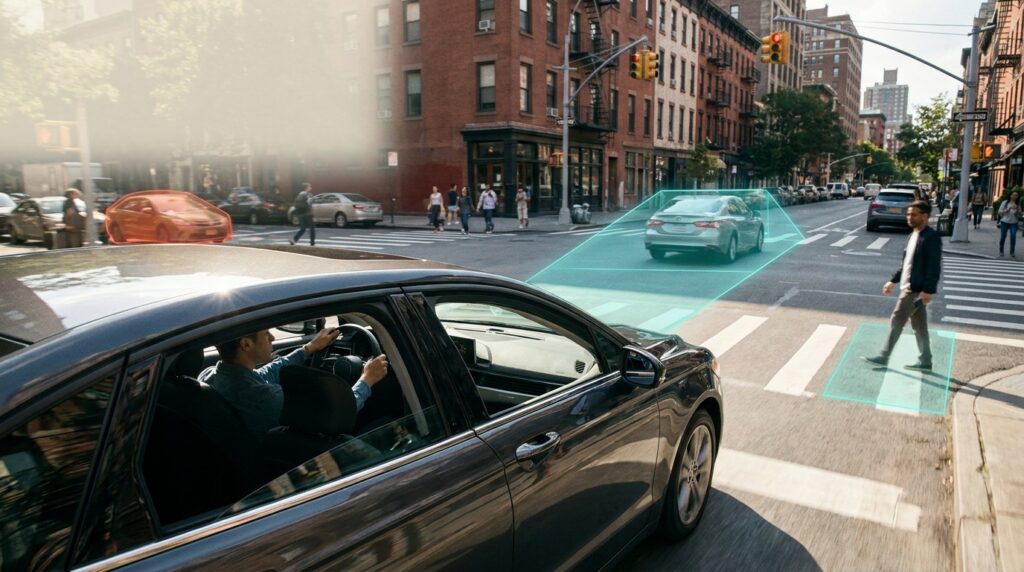
Improving pedestrian safety at night requires a layered approach. Drivers can adjust their behavior immediately, while transportation agencies can build roads that make safe behavior easier. Vehicle technology can add another layer, especially when a driver does not see a pedestrian soon enough.
NHTSA advises drivers to stay alert for pedestrians everywhere and at all times. Drivers should use extra caution in hard-to-see conditions, including nighttime and poor weather. They should also slow down and prepare to stop when turning or entering crosswalk areas. Pedestrians can improve their own visibility by using sidewalks, crossing in visible locations, and avoiding unexpected movements into traffic.
Safer Nighttime Streets Need More Than Brighter Lights
Street lighting can help drivers identify pedestrians sooner, but placement and quality matter. A bright lamp behind a pedestrian can create contrast problems instead of solving them. Lighting should illuminate crossings, sidewalks, conflict points, and approaches without creating excessive glare.
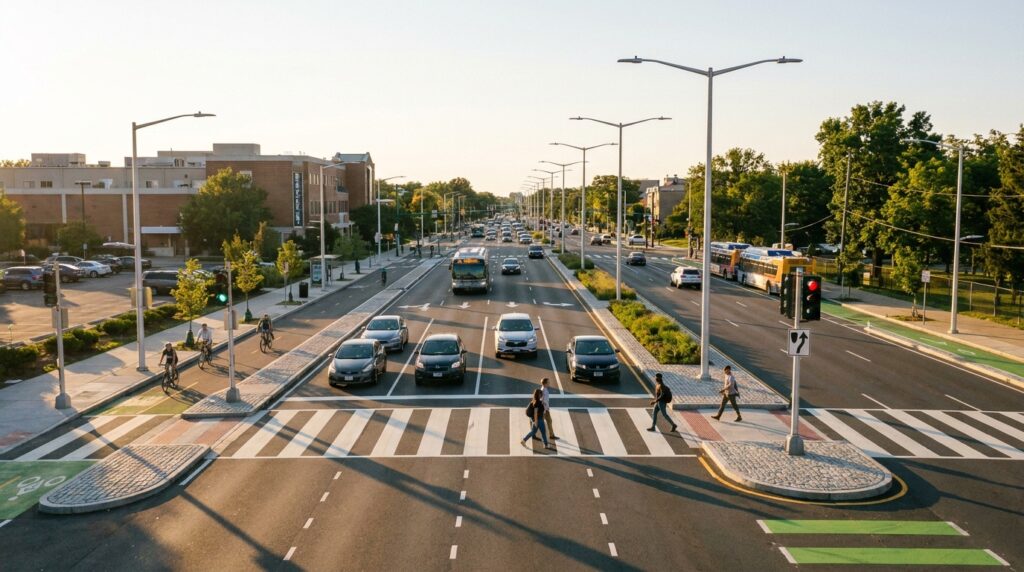
Road geometry matters too. Shorter crossing distances reduce exposure. Median refuges give pedestrians a safe place to pause on wide roads. Curb extensions can make people more visible before they enter a travel lane. Raised crossings and narrower lanes can encourage lower speeds in places with heavy foot traffic.
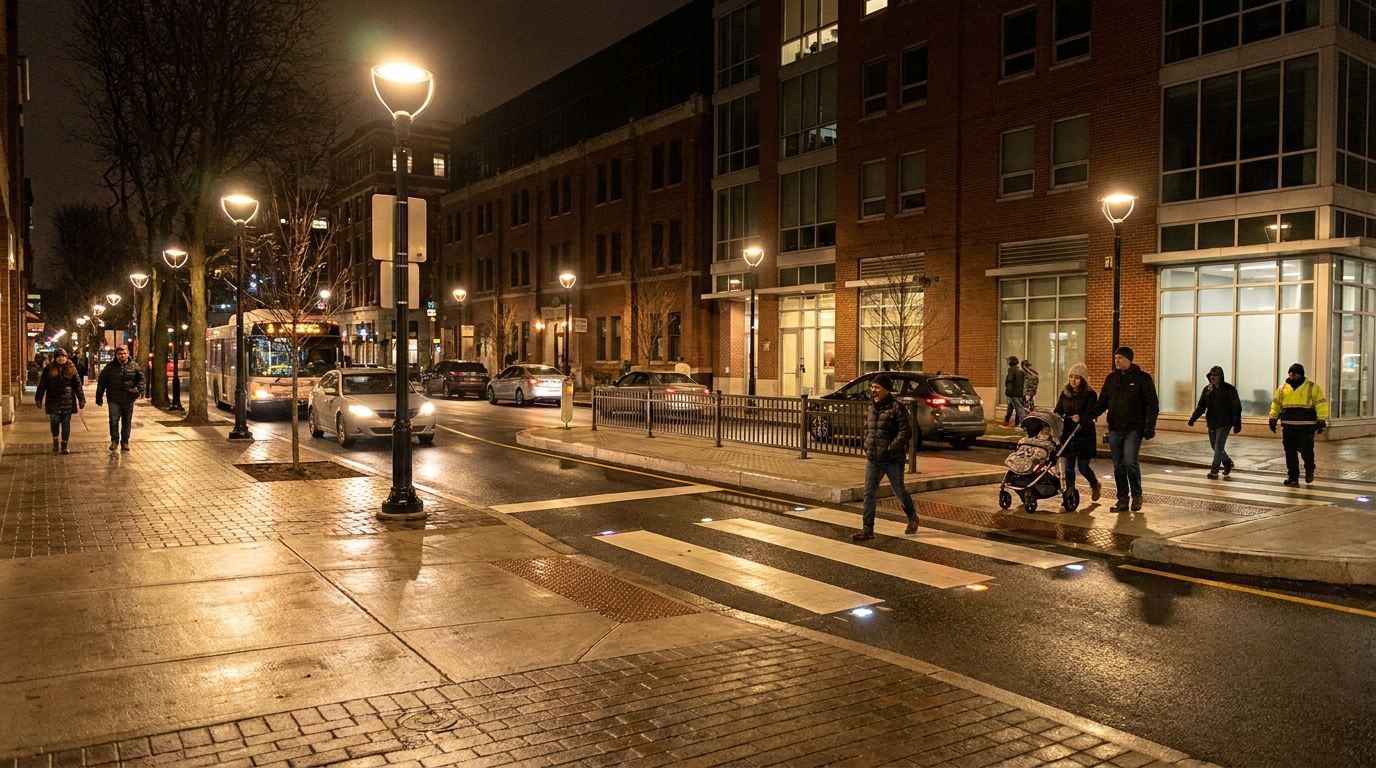
Communities should also use crash data to identify where nighttime deaths and serious injuries cluster. A small number of corridors may account for a large share of severe crashes. Improving those locations can produce more benefit than spreading resources evenly across an entire city.
The recent national trend shows that progress is possible. Our Traffic Deaths in 2026 analysis explains the wider decline in roadway fatalities. GHSA projects 6,732 pedestrian deaths in 2025, about 505 fewer than the year before. Yet the total still represents roughly 18 people killed each day. The goal should be to continue that decline while addressing the road conditions that make nighttime crashes so severe.
Simple Habits Can Reduce Risk Tonight
Drivers can make an immediate difference by slowing down after dark, keeping windshields and headlights clean, avoiding phone use, and scanning sidewalks as well as the travel lane. Extra attention is especially important near restaurants, transit stops, entertainment areas, schools, and neighborhoods where people may cross outside a marked intersection.
Distraction can erase the little reaction time that darkness already reduces. Our Distracted Driving in 2026 guide explains why phone use is often underreported and how driver-monitoring technology may help. Drivers should put the phone away before moving and handle navigation or messages while safely parked.
Pedestrians can also improve their chances of being seen. Light or reflective clothing can increase visibility. A phone flashlight can help in some settings, but pedestrians should avoid staring at a screen while crossing. Eye contact can be useful, but it should never replace checking that vehicles have actually slowed or stopped.
Communities can support both groups with better lighting, lower operating speeds, well-designed crossings, and safer vehicle technology. These measures follow a broader road-safety principle: people make mistakes, so the transportation system should reduce the chance that one mistake becomes fatal.
For official guidance, review NHTSA’s pedestrian safety resources. For detailed fatality trends by time of day, see the IIHS pedestrian fatality statistics. The latest national projections are available in the GHSA 2025 pedestrian fatality report.
The recent decline in pedestrian deaths is worth recognizing, but the nighttime numbers show how much work remains. Pedestrian safety at night will improve when drivers slow down and stay alert, vehicles detect vulnerable road users earlier, and streets provide enough light, visibility, and protection for people walking. Safer nights depend on all of those layers working together.